You will almost certainly have seen degraded reinforced concrete: the surface layer - the cover - missing, and the reinforcement exposed. It is very common, especially on balcony edges, and the homeowner, tired of broken corners and cracks, calls a trusted builder to sort it out.
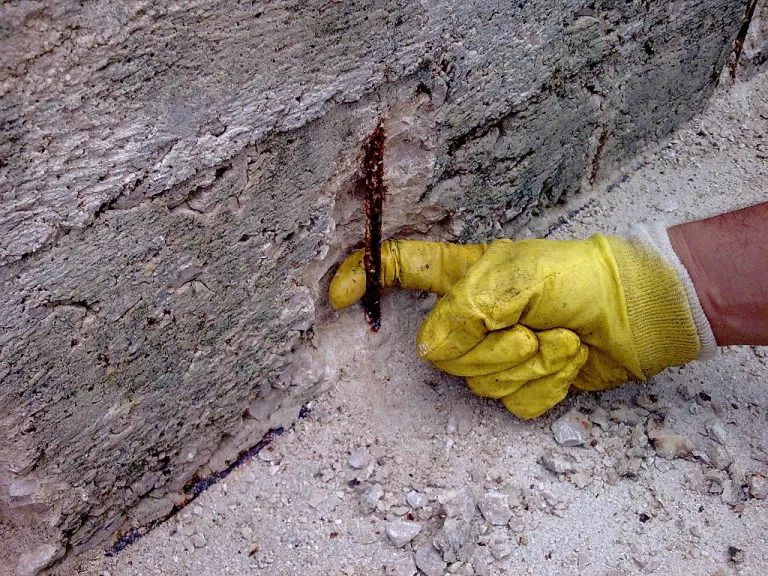
What now? The repair process is actually complex: understand why the concrete is bursting, where the water is coming from that corrodes it and rusts the steel; then close the gap in the waterproofing; then rebuild the missing parts. Rebuild - yes. But if the steel is not treated, it goes on rusting, the concrete bursts again, the bar section shrinks and the strength of the whole structure is compromised. A few years after the repair, the homeowner has the same problems - and the next call will not be to a builder.
Treating the steel matters as much as rebuilding
Beyond mechanical cleaning, a chemical treatment is needed. The market offers passivators and converters - which to choose?
Rust is a spontaneous compound of iron oxides, hydrates and basic carbonates that drives corrosion: the rust layer flakes, exposes fresh steel, and the process restarts. To prevent this we would passivate the bar: create a thin, non-porous, non-breathable film that blocks oxygen and keeps conditions stable. Any passivator, whatever the brand, must do this - i.e. prevent rust forming, because once it has formed, the passivator's effectiveness is very much reduced.
And if the rust is already there, as in our homeowner's case? Then a converter, which reacts with the rust and converts it into a stable layer that prevents further oxidation. The layer is oxidation-resistant iron tannate, which protects the steel until the concrete is rebuilt.
Passivator or converter: your choice. Mine is made - on my own house I would use a converter, and probably Rust Buster. Full method in our concrete repair guide.