How many times have we faced walls or floors with annoying cracks - and wished for an immediate solution? "Too many" is the unanimous answer. So let us start at the heart of it: the importance of curing.
Concrete as a sponge
Only a small part of the mix water is used in the hydration reaction that binds the components. The rest tends to evaporate - and as it leaves the pores it leaves "holes", and the structure contracts, exactly like a sponge drying out. The most immediate consequence is drying shrinkage cracking.
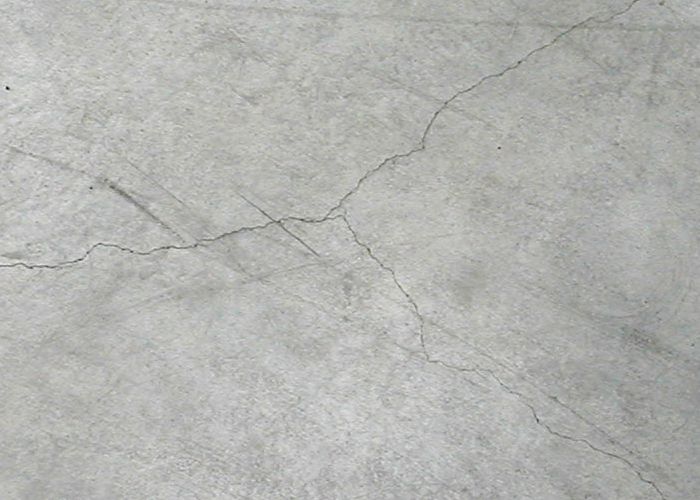
How to recognise it
Shrinkage cracks form a three-pointed star at 120 degrees - like a Mercedes badge. Now that you know, notice how often they appear on concrete floors.
How to prevent it
Nothing could be simpler: wet curing. Keep the surface at high humidity to limit evaporation of the water in the cement matrix. There used to be an operative whose job was keeping the pour wet. Today everyone is in a hurry. For a slab, keep a sheet over it; for vertical pours, keep the formwork on as long as possible (seven days is recommended).
But time is money, so few comply. What is needed is a product that reacts with the concrete's compounds and forms an anti-evaporation membrane: Evercrete Vetrofluid for concrete, or Evercrete Pavishield for industrial floors. Sprayed on the freshly placed or freshly struck concrete (wash off release agent first), the liquid glass penetrates deep, creating a permanent barrier that keeps humidity high and promotes hydration. Safe, CE marked to EN 1504-2, non-toxic, applied with a low-pressure pump.
Prevention beats cure - and with Vetrofluid you can.