"It is the only man-made object that receives a baptism: when you launch a boat you call the priest, have it blessed and give it a name. That is why boats have a soul, a story to tell and a future to hand on." (Gilberto Penzo)
Restoring an all-timber historic vessel is no ordinary job: it takes science, conscience and knowledge. There is a world of difference between repair and restoration, and the Compagnia della Marineria Tradizionale Il Nuovo Trionfo knows it - which is why they chose the sophisticated techniques also used on historic buildings and works of art.
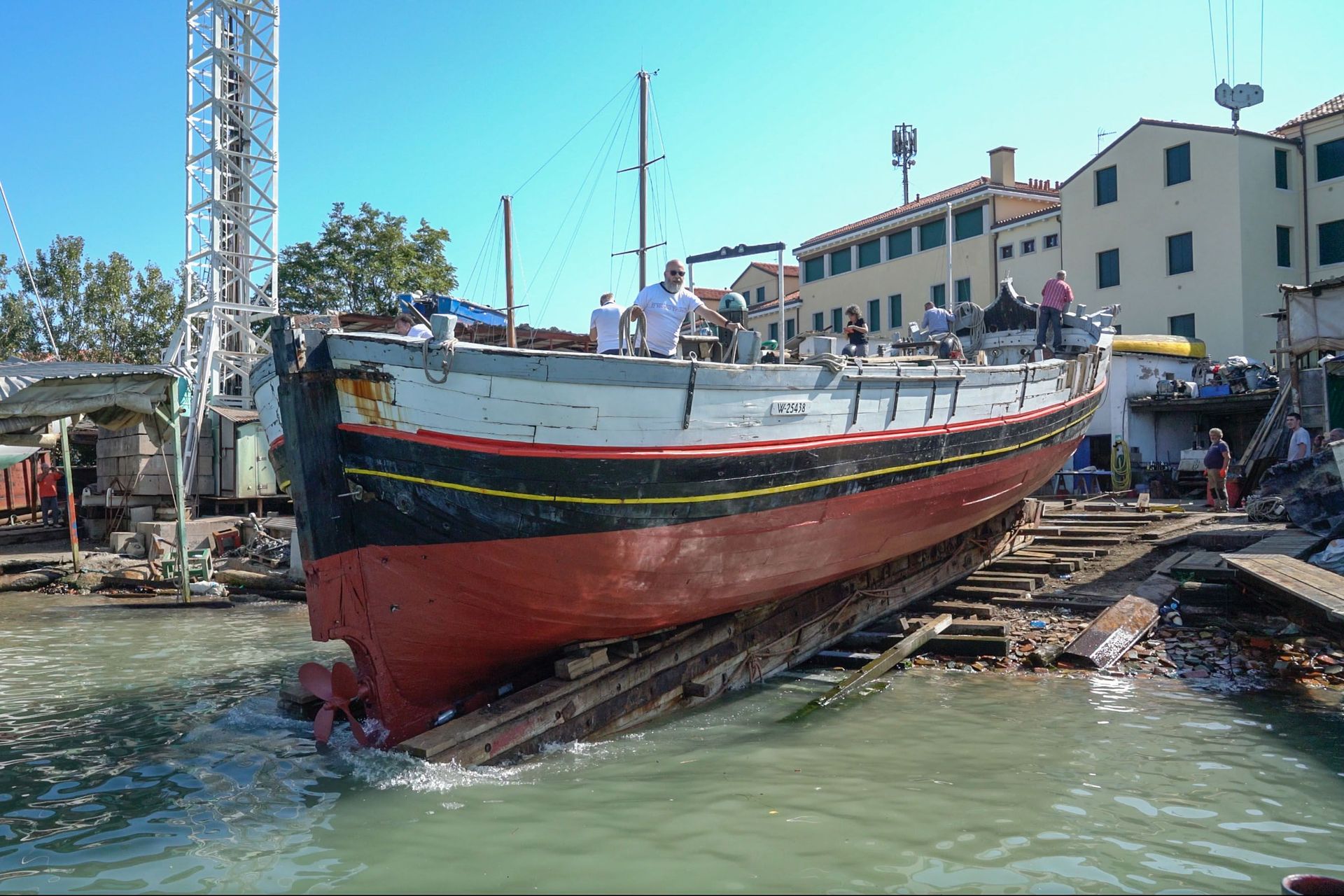
The timber of this trabaccolo is 90 years old, and it is the only one of the hundreds that once crowded the Adriatic still sailing.
Cleaning, then protection
The biological patina - mould, lichen, algae - was first removed with an enzyme-based cleaner that lifts growth without harming the timber. Everwood Eco Sealer then protected, consolidated and waterproofed the wood. Based on sodium silicate (liquid glass), it penetrates deep and forms a permanent barrier, reacting with the cellulose in the wood and "vitrifying" - cutting moisture and water absorption by 50%. It leaves no film, so the timber breathes normally; it is ecological; and its alkaline pH guards against micro-organisms such as shipworm and stops biological patina taking hold.
Clean, then seal: a simple two-step protocol for a vessel of this importance. If you pass through Venice, visit her at her natural berth, Punta della Dogana.
In the UK
The same sealer protects decking, cladding and historic timbers here - see Everwood wood sealer.